Voicings
Voicings are often referred to as secondary versions of chords, chords that are arranged differently concerning note order and position on the guitar fretboard (to be fully correct, a voicing is any variant of a chord including played in root position, but in this overview voicings implies alternative arrangements of chords). The guitar is an instrument that allows tons of different versions, and by that distinctions in sounds, for the most chords.
The first part of this guide presents some interesting voicings for various situations.
Miscellaneous voicings
Dadd11
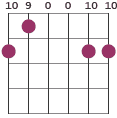
Gadd9
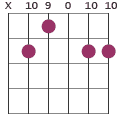
Cmaj7/E

Em11

Em7

C11

G6/D

Dsus4add9

Dmaj7sus2

E7sus4

E6sus4

Bsus2

C#7sus2

Asus2

Bbmaj7#11
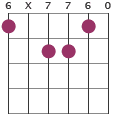
Comments
The Em11 voicing can also be seen as a Dadd chord with E in the bass, which perhaps makes it easier to memorize and also makes its function more logical. Omitting the 6th string, X54005, results in Gmaj9/D.
The C11 voicing can also be seen as Fmaj9/C. The Dsus4(add9) voicing can also be seen as Em7/D with D doublings and omitted 5th. The Dmaj7sus2 voicing can also be seen as C#m/D. If the E7sus4 voicing is excluding the 6th string it would be Asus4(add9) and the E6sus4 with an excluded 6th string would be Aadd9.
C#7sus2 can be played with open low and high strings, resulting in C#m9/E, creating a rich sound. The same can be done with Bsus2, which results in E6sus2.
Try in chord progressions
Some progressions that includes voicings:
Em7 - Em11 - Cmaj7/E
Bsus2 - C#7sus2 - Bsus2 - C#7sus2 - Asus2
Dsus2 - Dsus4add9 - D6/11 (XX0002) - Dadd11 (XX0032)
Bbmaj7#11 - Bm11 (7X7750) - Am9 (5X5500)
For PDF format and additional guidance, see Chord Voicings ebook with 100+ diagrams and progressions.
C major voicings
The most standard way to play the C version in most genres is shown in the diagram below:
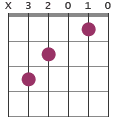
You probably know this version, but it can be of interest to widen the possibilities for the same chord (the indications "C (I)" and so are no official names, they are used here to separate the actual voicings):

C (I) - the G note is doubled, making the chord involve two 5th and one 3rd notes instead of the opposite.
C (II) - the 4th string is muted and this voicing are most suitable in fingerpicking contexts.
C (III) - utilizing the C note on the 6th string as a bass note.
Using in progression:
C (I) - Fsus2 (XX3013)
More C chord voicing:
Cmaj7 - 8 10 10 9 0 0
D major and minor voicings
The majority of voicings for D major are played higher up the fretboard; the possibilities are relatively few in open position since only four strings are involved with D as the bass note.

D (I) - one of the movable major shapes on the three highest strings together with open D string.
D (II) - another movable major shape on the three highest strings together with open D string.
D (III) - close to the regular shape but with an A doubling and without F#, which can be written D5 or possibly D(omit3), resulting in more treble.
Using in progressions:
D (II) - Gmaj7/D (XX0 12 12 14)
D (III) - Em11 (XX2035)

Dm (I) - one of the movable minor shapes on the three highest strings together with open D string.
Dm (II) - another movable minor shape on the three highest strings together with open D string.
Dm (III) - a voicing with F in the bass, which sometimes is written Dm/F.
Regarding Dm/F and other possibilities such Dm/A and Dm/B are to be accurately referred to as slash chords. A stricter definition of voicings is that the root of the chord remains the same while the other notes shift order.
E major and minor voicings
Due to the open low and high E-strings there are lots of possibilities for alternative versions for both major and minor chords with E as root:

E (I) - partly as the standard shape in open position but with the lowest strings muted.
E (II) - using the 5th string for the bass note instead of the 6th. 076400 is possible though.
E (III) - an option primarily for fingerpicking that combine a movable three-finger shape with the low and high E-strings.
Using in progression:
A/E (0X222X) - B/E (0X444X) - E (III)
E (III) - A/E (0 X 11 9 10 0)
B11//E (009800) - Add9/E (007600) - Eadd11 (002100)
E/G# (X 11 9 9 0 0) - Bm11/F# (X97700) - E6 (X76600)

Em (I) - one of many possible Em voicings that include both the open 6th string and the E note on the 5th string, 7th fret in combination with open high strings.
Em (II) - partly similar to "Em (I)", but a using three fingers and a stretch.
Em (III) - the C shape with open low E-string generate a rich sound with open strings and high treble notes.
Using in progression:
Em (I) - C/E (03555X) - D/E (05777X)
Em (III) - A7/E (0 12 11 0 10 0) - Esus9 (0 12 0 11 10 0)
More E chord voicing:
Emaj13 (046000) - E6sus2 (024600) - Esus4 (002400)
G major voicings
G chords are often played in open position, which the standard tuning serves well for. But it can of course be played all over the neck:
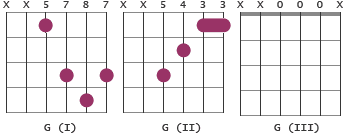
G (I) - using the 4th string for the bass note.
G (II) - another option with the bass note on 4th string by using an F shape.
G (III) - an option primarily for fingerpicking that utilize the fact that these three strings form an G chord.
A major and minor voicings
Due to the open A string, many possibilities arise. The open high E-string can also be played open since it's one of the notes in both A major and minor:
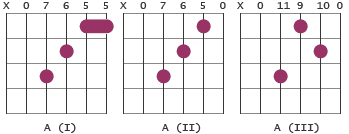
A (I) - using an F major shape together with an open A string.
A (II) - almost the same as the previous, but with the open high E-string included.
A (III) - a movable three-finger shape combined with open strings.
Using in progression:
E/A (X 0 14 13 12 0) - B11/A (X09870) - A (II)
Aadd9 (X07600) - A (X07650) - Amaj9 (X06400) - F#m11/A (X04200) - Dadd9/A (X04200) - Add9 - A
More A chord voicing:
A6 - X07670

Am (I) - a movable three-fingers shape combined with open strings.
Am (II) - another movable three-fingers shape combined with open strings.
Am (III) - partly as the standard shape in open position but with the lowest strings muted.
Additional three-finger voicings:
A6(no5): XXX222
Back to resources